
Key Takeaways
Pet-friendly rentals attract more qualified applicants: Allowing pets expands the tenant pool, reduces vacancy periods, and gives property owners more opportunities to select reliable renters.
Pet owners often stay longer and support stable income: Longer tenancy can lower turnover costs, reduce vacancies, and create more predictable rental revenue.
Clear policies and thorough screening minimize risk: Well-defined pet rules, careful tenant screening, and routine inspections help protect the property while maintaining positive landlord-tenant relationships.
California laws require compliance with assistance animal rules: Property owners must understand fair housing requirements for service and emotional support animals, making professional property management a valuable resource for staying compliant and reducing risk.
The rental market in California is highly competitive, including cities such as Los Angeles, San Diego, San Jose, and smaller growing communities. Property owners often focus on reducing risk and avoiding property damage. One common decision is whether to allow pets in rental homes.
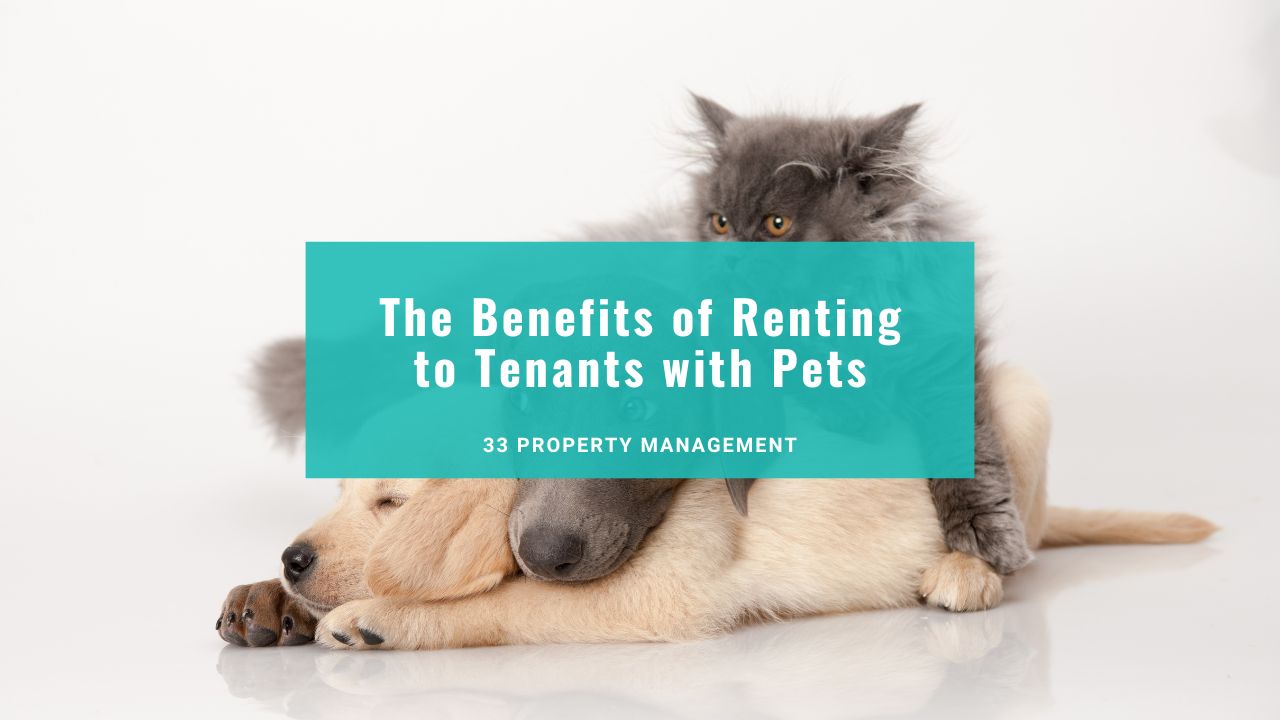
More renters now own pets, and this trend continues to grow. A strict no-pet rule can limit the number of qualified applicants. It can also increase vacancy time and reduce long-term income stability.
Renting to tenants with pets can be a practical business decision when proper screening and clear rules are in place. Get the help you need to succeed from 33 Property Management.
Get in Touch with Our Experts!
1. Larger Pool of Applicants
Allowing pets increases the number of people who can apply for a rental unit. Many renters in California have at least one pet, and they often search only for pet-friendly housing.
A larger applicant pool gives property owners more choice. This improves the chance of selecting tenants with strong rental history, stable income, and good references. It also helps reduce the time a property stays vacant, which supports steady rental income in Encinitas.
2. Longer Tenancy Periods
Tenants with pets often stay in one home longer. Moving with pets can be difficult, especially in areas with limited pet-friendly housing options.
Longer tenancy reduces turnover costs such as cleaning, advertising, and unit preparation between tenants. It also reduces time spent managing frequent vacancies. Stable tenants contribute to predictable rental income and less disruption for property owners.
3. Increased Rental Income Opportunities
Pet-friendly properties can often support higher rental income. In many California markets, demand for pet-friendly housing allows property owners to set competitive rent levels.
Some properties may also include additional pet-related charges where legally allowed, such as pet rent or pet deposits. These charges help cover possible wear and maintenance needs while keeping the property financially balanced.
4. Responsible Tenant Behavior
Many tenants with pets are careful and responsible. Caring for pets requires planning, routine, and financial stability. These habits often carry over into how tenants treat a rental property.
Responsible tenants are more likely to pay rent on time, follow lease rules, and report maintenance issues early. While this is not guaranteed for every tenant, many property owners report strong outcomes when screening is done properly.
5. Property Care and Maintenance Awareness
Pet owners often develop habits that support regular cleaning and home care. They are aware of the need to maintain a safe and clean environment for their pets.
With clear lease terms, tenants are more likely to take care of flooring, outdoor areas, and interior spaces. Property owners can also reduce long-term damage by choosing durable materials such as hard flooring instead of carpet in high-use areas.
Routine inspections and maintenance planning help keep properties in good condition over time.
Legal Considerations in California
California rental law requires property owners to follow specific rules regarding pets and assistance animals. Service animals and emotional support animals are not treated as pets under the law. These animals must be allowed in most housing situations, even if pets are not permitted.
Property owners cannot charge pet fees or deposits for assistance animals. However, tenants remain responsible for any damage caused by any animal, including service or emotional support animals.
Understanding these rules is important to avoid legal issues and ensure fair housing compliance. Clear policies help property owners manage expectations from the start of a tenancy.
Learn More About Our Property Management Services!
Clear Pet Policies Reduce Risk
A written pet policy helps reduce uncertainty and disputes. It should clearly explain what is allowed in the property.
A strong policy usually includes the number of pets allowed, size limits if applicable, behavior expectations, and tenant responsibility for damage. It should also explain approval requirements before bringing a pet into the property.
Clear rules help both tenants and property owners avoid misunderstandings and reduce conflict during the lease period.
Tenant Screening Remains Essential
Allowing pets does not replace the need for proper tenant screening. Screening should still include income verification, rental history checks, and reference checks.
For pet owners, additional information can be requested, such as pet type, age, and behavior history. This helps property owners make informed decisions and reduce potential risks.
Good screening improves the quality of tenants and supports long-term property performance.
Property Management Support
Managing pet-friendly rentals requires consistent policies, legal awareness, and regular oversight. Many property owners choose to work with a professional property management company to handle these responsibilities.
A company such as 33 Property Management helps with tenant screening, lease preparation, pet policy enforcement, and ongoing property maintenance coordination. This reduces the workload for property owners and helps ensure compliance with California rental laws.
Professional management also helps reduce vacancy time and supports better long-term rental performance through structured processes and consistent communication.
Bottom Line
Allowing tenants with pets can provide clear advantages for rental property owners in California. It increases the number of applicants, supports longer tenancy periods, and can improve overall rental income stability. With proper screening and clear lease terms, risks can be managed effectively.
Legal requirements in California must also be followed, especially regarding assistance animals and fair housing rules. When these factors are handled correctly, pet-friendly rentals can perform well in both urban and suburban markets.
Renting to tenants with pets is a practical option when supported by clear rules and proper management. Property owners who use structured screening and legal compliance can reduce risk while benefiting from stronger demand.
Working with a property management company like 33 Property Management helps simplify the process and supports more stable long-term rental results in the California market.